Field note ·
Throughput arithmetic: the layer budget behind a published rate
A sortation system's published rate is a sum of decisions, not a property of the machine. The number that predicts real throughput is the rate of the slowest layer - and it is almost never the sorter.
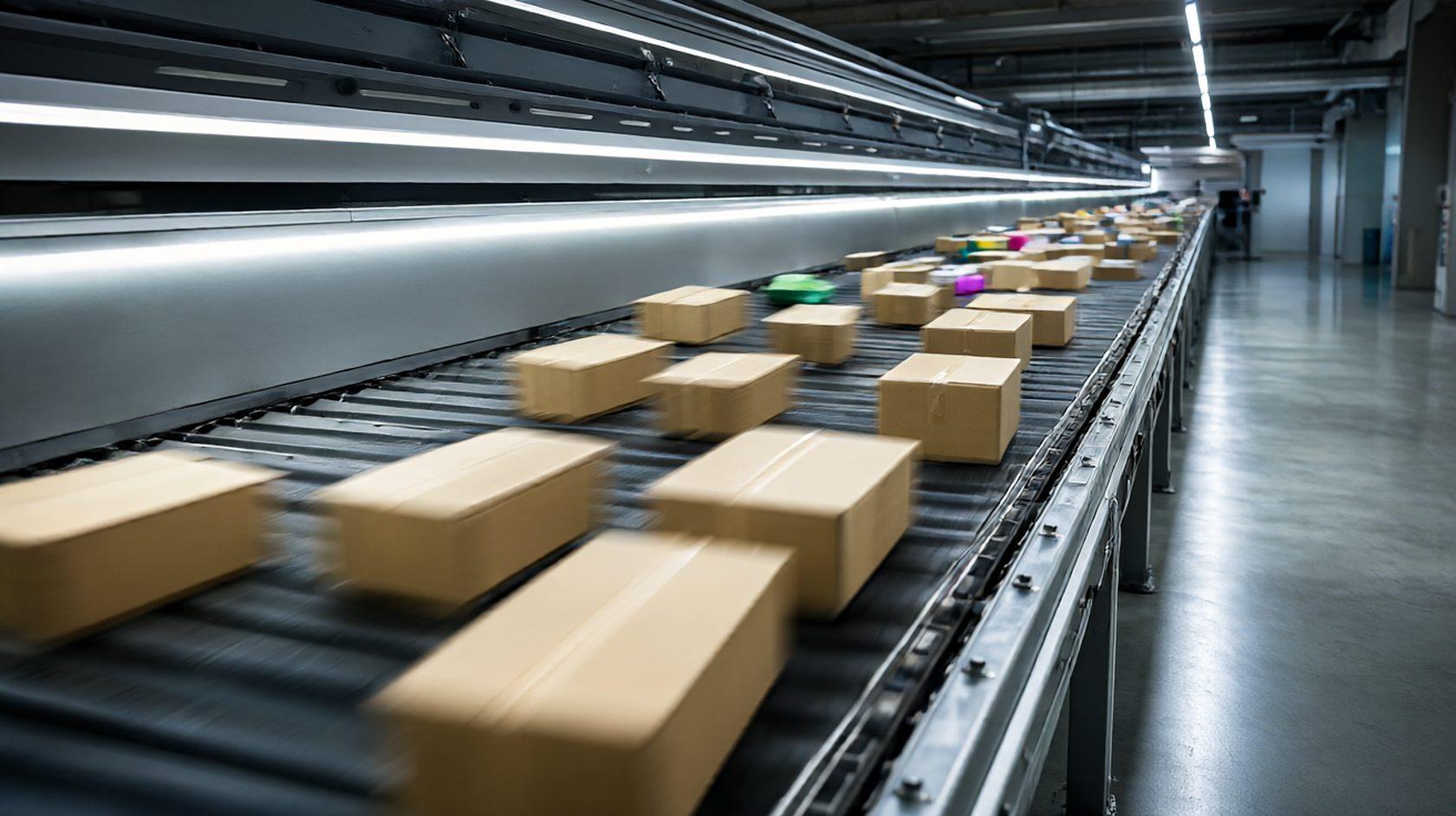
The published rate and the rate you get
Sorters are sold with a headline rate: 4,000 items an hour, 8,000, 12,000. That figure is usually the mechanical capability of the sorter at a defined pitch, with an assumed induction and an assumed read rate. In a real building the rate you get is lower, and the difference is not a sales exaggeration - it is the rest of the system.
The useful way to think about it is a layer budget. Every layer in the chain - receiving, induction, singulation, scanning, diverting, accumulation, loading - has a rate. The system's throughput is the rate of the slowest layer, not the average and certainly not the fastest.
This is the single most useful number in a sortation project, and it is usually absent from the quotation. Ask for the layer budget and the answer tells you whether the supplier has designed a system or sold a machine.
Building the layer budget
Start at the sorter and work both ways. The sorter's rate at your item mix and pitch is the first number. Then the induction rate that can actually feed it, the singulation rate that can feed the induction, the scan rate at your label quality and label positions, and the divert rate at your chute configuration.
Each layer has a realistic efficiency. A singulator running at 85 percent of nominal is normal. An induction station running at 90 percent is good. A scan tunnel reading 97 percent on labels it has never seen is optimistic. Multiply them out and the system rate appears.
The multiplication is the part that surprises people. Four layers at 90 percent is 66 percent of nominal. A system sold at 8,000 with four such layers is a 5,300 system, and the labour plan built on 8,000 will be short every peak.
Induction is the usual bottleneck
A sorter can only sort what it is given, at the rate it is given. Manual induction is limited by the human: a trained operator can key or scan a parcel every two to three seconds, which is 1,200 to 1,800 an hour, and that is with a good ergonomic layout and no exceptions.
Semi-automated induction - a belt that presents the parcel and an operator who positions it - can reach 2,500 to 3,000 an hour. Fully automated singulation and induction is the expensive step and the one that is most sensitive to product variability.
The design decision is therefore about the product, not the sorter: bagged, loose, poly-wrapped and irregular items are slow to induce; regular cartons are fast. A layer budget built on cartons and operated with bags is a layer budget that was never true.
Gap, pitch and the physics of diverting
The sorter needs a gap between items to divert one without touching the next. The gap is set in metres and in time: at 2 metres per second, a 500 mm gap is a quarter of a second. That quarter second, multiplied across the rate, is the difference between a 6,000 and an 8,000 system.
Divert reliability depends on the item: a light poly bag decelerates differently from a 20 kg carton, and a chute designed for one may reject the other. The rate is therefore a rate at a mix, and any serious specification states the mix.
Where a system must handle both, the design usually ends up with two induction paths and a merge - which is another layer in the budget, with its own efficiency.
Accumulation, peaks and the cost of the average
Peak hour is the only rate with commercial meaning. A system sized on the average will fail every morning at 08:00, and the failure will be attributed to the sorter, which was doing what it was specified to do.
Accumulation converts a downstream stop into recovered throughput, but only if it is sized in minutes of the peak rate. One minute of buffer at 1,200 items an hour with a 400 mm pitch is about eight metres of bed. That is the cheapest insurance in the building and the first thing value-engineered out.
The commercial structure should follow: capacity sized on peak, priced on annual volume, and acceptance tested at peak with the real mix. Anything else is a rate that exists only in the quotation.
Testing the number before you buy
Ask for the layer budget in writing, with the efficiency assumption for each layer and the mix used. Then ask which layer the supplier considers the constraint and what happens if the mix shifts toward slower items.
Ask for the acceptance test to run at peak for thirty minutes at the specified mix, with the exception rate measured, not just the sorted count. A system that sorts 8,000 items and exceptions 400 of them has moved 7,600, and the labour plan needs to know.
The arithmetic behind a published rate, with the layer budget worked through in detail, is set out in our conveyor and sortation guide.
A worked illustration
Take a sorter nominally capable of 7,000 items an hour at a 600 mm pitch. Induction at 92 percent, singulation at 85 percent, scan at 96 percent, divert at 98 percent. Multiply: 7,000 x 0.92 x 0.85 x 0.96 x 0.98 is about 5,150.
That is the number to plan labour and dock doors against. If the business case was written on 7,000, the case is 26 percent optimistic before a single parcel has moved - and the shortfall will appear as overtime, not as a machine fault.
The warehouse around the sorter
A sorter's rate is also limited by what happens to the parcels after the divert. A chute that fills, a bag that is not changed, a cage that is not emptied - each turns into a stop, and a stop is lost throughput at the rate of the whole upstream system.
The design of the outfeed is therefore part of the layer budget. Chute capacity in parcels, bag change time, cage movement and the labour to do it at peak are all rate assumptions, and they are usually owned by a different team from the sorter.
The tests that reveal it are simple: run the system at peak for thirty minutes with the real outfeed staffing and count the stops. The stop count, not the sorted count, is the number that describes the system.
Data to collect before the design
Six weeks of real data beats any assumption: item dimensions and weights by share, hourly volume with the peak day marked, label position and quality, exception rate by reason, and the outfeed destinations with their shares.
Where the data does not exist - a new operation - collect it for a pilot week with a manual process. A week of manual sorting produces the mix, the exception reasons and the realistic induction rate, and it costs less than the first design iteration.
The layer budget is only as good as the mix it was built on. Which is why the specification should state the mix, and the acceptance test should use it.
Changeover, redundancy and the second sorter
A single sorter is a single point of failure. The redundancy decision is commercial: a second sorter for peak, a manual bypass for breakdowns, or an accepted risk with a service contract. Each has a cost, and the cheapest is usually the bypass with a defined manual procedure.
Changeover is the hidden rate killer in high-mix operations. A sorter that needs thirty minutes of reconfiguration between product families is a sorter that loses a shift a week, and no headline rate survives that. Specify the changeover time and test it at acceptance.
The layout question follows: a system designed around one product family will be a system that fights every family added later. Designing the chutes and the induction for the mix you expect in three years is cheaper than rebuilding the outfeed in two.
The number to put on the business case
Put the layer-budget rate on the business case, not the headline rate. The difference between 8,000 and 5,300 is the difference between a payback of two years and one of four, and the finance case should be built on the number the building will actually produce.
Then put a sensitivity line: if induction efficiency drops from 92 to 85 percent, what happens to the payback. A case that survives the sensitivity is a case that can be defended when the first peak arrives.
What to check
- Ask for the layer budget in writing, not the headline rate.
- Multiply layer efficiencies; four layers at 90 percent is 66 percent.
- Treat induction as the default bottleneck until proven otherwise.
- Size capacity on peak hour, price on annual volume.
- Acceptance test at peak, with the real mix, exceptions included.