Field note ·
Overhead crane duty class decides the structure, not the tonnage
Two cranes rated at ten tonnes can differ by a factor of three in structural life. The number that matters is duty class, and the number that decides whether the building survives is the wheel load at each corner.
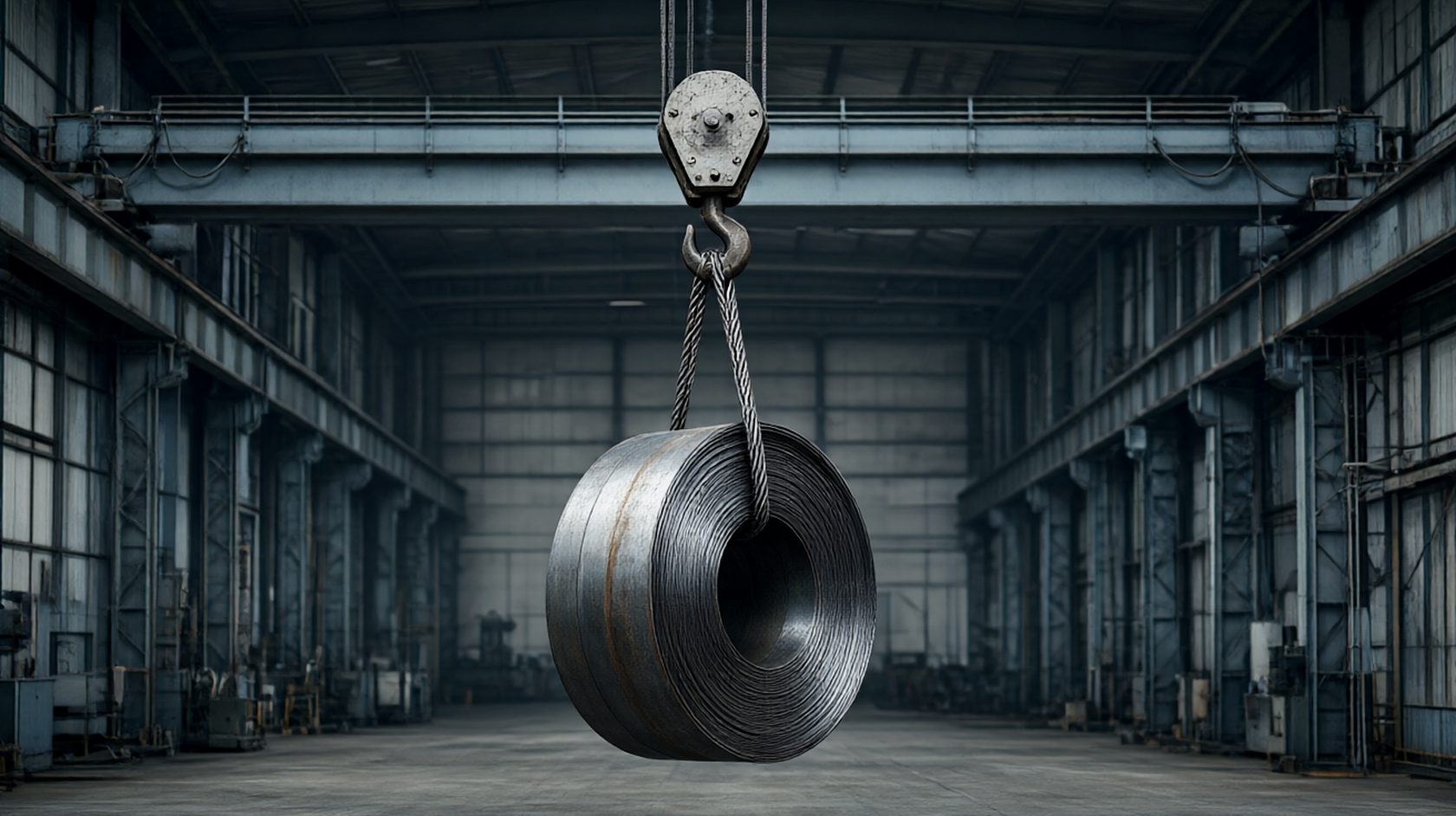
Two cranes, same tonnage, different animals
A ten-tonne crane lifting at 30 percent of capacity on a single shift and a ten-tonne crane lifting at 85 percent on three shifts share a capacity plate and nothing else. Their structural lives differ by a factor of three or more, because fatigue is accumulated by cycles at load, not by calendar time.
The classification systems - FEM, ISO and the regional variants - exist to make that difference explicit. They describe the crane by its duty class, which combines the number of cycles, the load spectrum and the average time under load. A crane specified at the wrong class is either overbuilt and expensive, or underbuilt and cracking at year four.
The practical consequence is that the duty class has to be written into the specification by the buyer, from their own operating pattern. A supplier who offers a standard crane will assume a standard duty, and the standard duty is almost always lighter than a real three-shift operation.
The load spectrum, honestly
The load spectrum is the distribution of lifts by weight. A crane that mostly lifts 3 tonnes and occasionally 10 is not the same as one that lifts 8 tonnes most of the time. The spectrum determines the equivalent load for fatigue calculations, and it is best built from a week of real lifting records rather than from a capacity figure.
The same applies to the number of cycles. Count lifts per shift, including empty returns if the classification requires them, and multiply by shifts and days. A crane doing 60 lifts a shift on three shifts is 90,000 cycles a year before any allowance for maintenance moves.
Where the data does not exist - a new plant - the specification should state the assumption, and both parties should know it is an assumption. An honest assumption is cheaper than a wrong certainty.
Wheel loads and the building
The crane's own weight plus the lifted load is carried on the end trucks' wheels and transferred to the runway beam. The wheel load at each corner, with the trolley at the worst position, is the number the structural engineer needs, and it is frequently larger than the building was designed for.
The worst case is not the maximum lift in the centre. It is the maximum lift with the trolley at the end of its travel, which loads one end truck and one runway beam disproportionately. A crane specified without that case has a hidden structural problem that appears as runway deflection, rail wear and eventually a crack.
For an existing building, the check is a structural review before the order, not after. Adding a crane to a bay designed for a lighter one is a building project with a crane attached, and the budget should reflect it.
Runway, rail and the details that cause downtime
The runway is a system: beam, rail, rail clips, end stops, festoon or conductor, and the alignment between them. Most crane downtime in the first year is runway-related - rail joints that step, end stops that were sized for a lighter crane, conductor rails that lose contact on a long span.
Rail alignment tolerance is a real number and it is small. A step at a rail joint is felt as a bump at every pass and wears the wheel, the bearing and the rail. Specifying the alignment and verifying it before the crane is commissioned is cheaper than the wheel replacement at year two.
Buffer and end-stop sizing follows the kinetic energy of the crane plus load at travel speed, not a catalogue default. A crane that hits its end stop hard does so every day.
Inspection, testing and the paper that goes with it
A new crane is load tested before handover, at a defined overload, with the result recorded. The test is not a formality: it is the moment when the runway, the end stops, the brakes and the overload limiter are proven together, and it is the last time the supplier has the incentive to fix a weakness for free.
Periodic inspection afterwards is driven by the duty class and by regulation. The items that matter are the ones that degrade: rope, hook, brake, limit switches, overload limiter, rail and wheel wear, and the structure itself at the joints. A monthly visual and an annual detailed inspection with measurements is the usual minimum for a production crane.
Keep the test certificate, the inspection reports and the repair history together. When a crane is sold, or when an insurer asks, that file is the difference between an asset and a liability.
Specifying for the next ten years
Write the duty class, the load spectrum, the cycles per year, the worst-case wheel load, the runway alignment tolerance, the speed requirements and the control interface. Then require the supplier to confirm each one against their design, in writing, at drawing approval.
Allow for a future increase in capacity or speed where the structure permits it. The cheap provisions are a runway beam sized one class up, end stops with margin and a conductor rail with spare capacity. The expensive provision is a new building.
For the equipment side, the class, span and lifting details we work to are set out in our industrial cranes range, which lists the duty assumptions against each configuration.
The decision order
Duty class first, then load spectrum, then wheel loads, then runway, then the crane. Getting that order wrong means re-engineering backwards from a machine that was chosen because it was available.
If the operating pattern is genuinely unknown, specify the heavier class and buy the lighter crane's speed. Structural margin is the one thing that cannot be retrofitted cheaply.
Controls, radio and the operator interface
A crane is operated through an interface that is either a pendant, a radio or a cab. Each changes the duty cycle: radio control lets the operator stand where the load is, which shortens the cycle and increases the number of lifts per hour - which feeds back into the duty class.
Radio control also introduces a failure mode. A lost signal during a travel movement must fail to a safe state, not to the last command. Specifying the fail-safe behaviour and testing it at commissioning is a five-minute test that prevents a very expensive incident.
The other interface item is the load display and the overload limiter. A limiter that trips at 100 percent of rating and cannot be bypassed is a safety device; one that can be overridden with a key is a suggestion.
Refurbish or replace
A crane structure has a long life; the mechanics do not. A twenty-year-old crane with a sound structure and a worn hoist is often cheaper to refurbish than to replace, provided the duty class is unchanged and the runway is adequate for the current loads.
The refurbishment decision needs three measurements: the structure's condition at the joints, the runway alignment, and the duty class the crane will actually see for the next ten years. If the duty has increased since the crane was installed, refurbishing restores a crane that is still under-classed.
The rule that holds in most plants: refurbish when the structure and the runway are sound and the duty is unchanged; replace when either the duty has risen or the runway cannot be brought into tolerance for a reasonable cost.
The inspection interval is a consequence, not a default
The interval between detailed inspections follows the duty class and the environment, not the calendar. A crane in a foundry at high duty needs quarterly attention; the same crane in a warehouse at light duty is well served annually.
The inspection itself should produce measurements, not ticks. Rope diameter, hook opening, brake stopping distance, rail wear and wheel flange thickness are numbers that trend, and the trend is what predicts a failure.
The most useful thing a plant can do is keep the inspection results in one file across years. A rope that has lost 4 percent of its diameter in twelve months is a rope with a story, and the story is more useful than the pass mark.
The maintenance contract that actually protects the crane
A maintenance contract should define the inspection scope, the interval by duty class, the response time for a breakdown, the spare parts it includes and the parts it excludes. The exclusions matter: rope, brake linings, wheels and rail are the wear items that generate most of the cost.
The contract should also require the inspection report to be delivered whether or not anything is found. A contractor who reports only problems has no baseline, and without a baseline the next inspection cannot show a trend.
One clause is worth adding in every plant: the contractor must record the measurements, not only the verdict. It is a small administrative burden and it converts the maintenance history from a folder of certificates into an asset.
What to check
- Write the duty class from your own cycle count and load spectrum, not the supplier's default.
- Compute the worst-case wheel load with the trolley at the end of travel.
- Check the existing building's capacity before ordering, not after.
- Specify rail alignment tolerance and verify before commissioning.
- Keep the load test certificate, inspection reports and repair history in one file.